
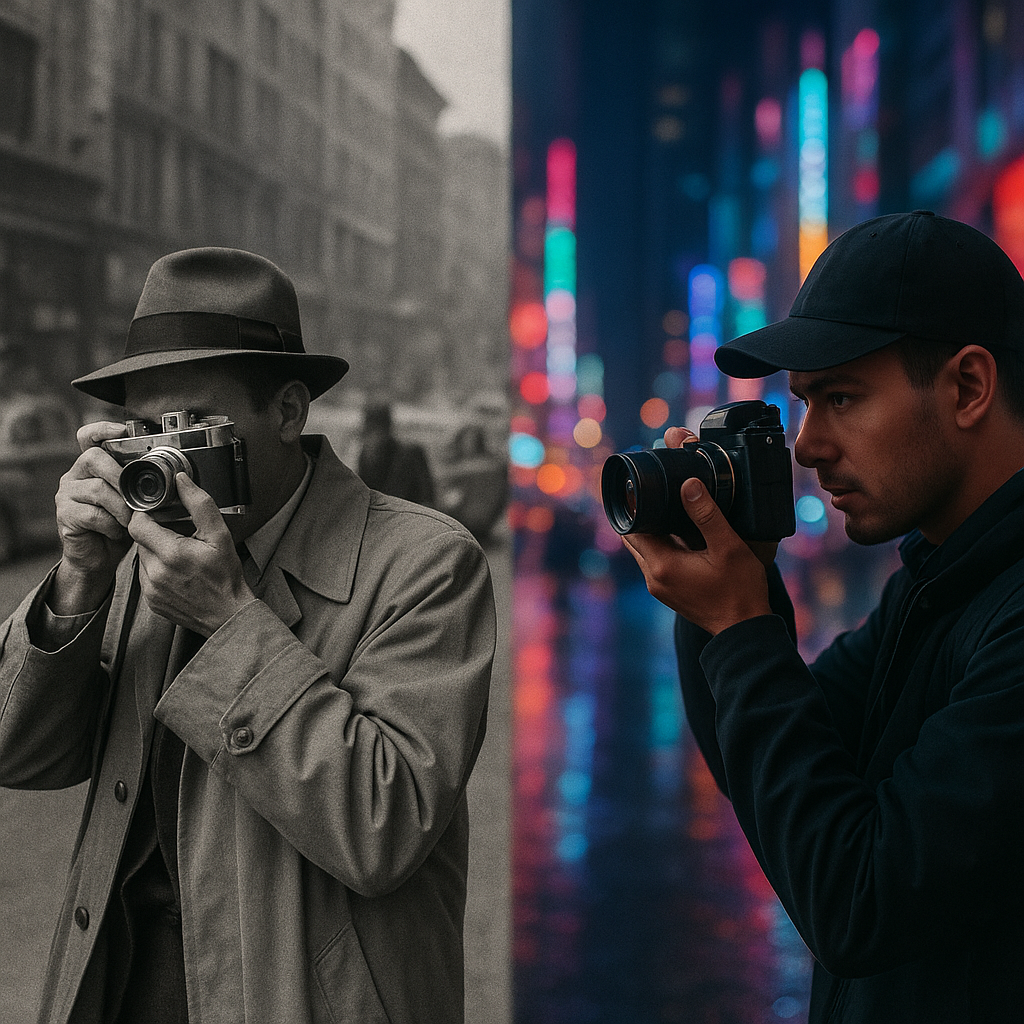
Urban photography and street photography are terms often used interchangeably, but their histories tell slightly different stories. One grew out of rebellion, curiosity, and a desire to capture raw, unscripted human moments. The other expanded that vision to include architecture, light, texture, and the city itself as a living subject. Together, they form one of the most dynamic and democratic art forms in photography — one that anyone with a camera and a willingness to step outside can practice.
But how did we get here? The journey from the earliest candid photographs of city life to today’s carefully composed urban landscapes is a fascinating one, shaped by technological breakthroughs, social movements, and bold individual voices who refused to keep their cameras pointed at the predictable.
What Is the History of Street Photography?
Street photography as a deliberate art form began to take shape in the late 19th century, though its roots are tangled up with the invention of photography itself. Early photographers were drawn to cities almost immediately — not just because that’s where the people were, but because urban environments offered an endlessly changing theater of human activity.
One of the earliest and most influential figures was Eugène Atget, a French photographer who spent decades documenting Paris from the 1890s through the 1920s. Atget wasn’t trying to make art in the way we’d define it today — he was creating a visual archive. But his images of empty streets, market stalls, and decaying courtyards had an eerie poetry that later generations recognized as genuinely revolutionary.
The real turning point came with the invention of smaller, more portable cameras. The introduction of the Leica 35mm camera in 1925 changed everything. Suddenly, photographers could move through crowds without a bulky tripod. They could shoot quickly, quietly, and without drawing much attention. This opened the door for photographers like Henri Cartier-Bresson, who developed his now-iconic concept of the “decisive moment” — the precise fraction of a second when composition, light, and human action align perfectly.
Through the 1930s, 40s, and 50s, street photography flourished, particularly in New York and Paris. Photographers like Berenice Abbott, Lisette Model, and Weegee were all capturing urban life with a raw, unfiltered energy. The streets were their studios, and the city’s residents — whether they knew it or not — were their subjects.
The 1960s: When Street Photography Found Its Identity
If there’s a golden era for street photography, most historians point to the 1960s. This was a decade defined by social upheaval, and photographers were right there in the middle of it. The streets weren’t just backdrops — they were battlegrounds, celebrations, and stages for everything happening in culture and politics.
In the United States, photographers like Garry Winogrand, Lee Friedlander, and Diane Arbus were producing work that felt genuinely new. Their photographs were messy, sometimes uncomfortable, and deeply human. Winogrand in particular became almost mythological in his obsessive approach — he reportedly left behind more than 300,000 unedited negatives at his death in 1984, having photographed compulsively wherever he went.
It was also during this period that the New York Photo League and institutions like the Museum of Modern Art began to legitimize street photography as fine art, not just documentary journalism. The line between art photography and documentary work was blurring in fascinating ways.
The Role of Social and Political Context
Street photography has never existed in a vacuum. The images that define the genre are deeply connected to the social realities of their time. Civil rights protests, antiwar demonstrations, urban poverty, and counterculture movements all made their way into the work of street photographers during the 1960s. This is partly why the genre carries such moral weight — at its best, it forces viewers to confront realities they might otherwise walk past without seeing.
What Is the Difference Between Street Photography and Urban Photography?
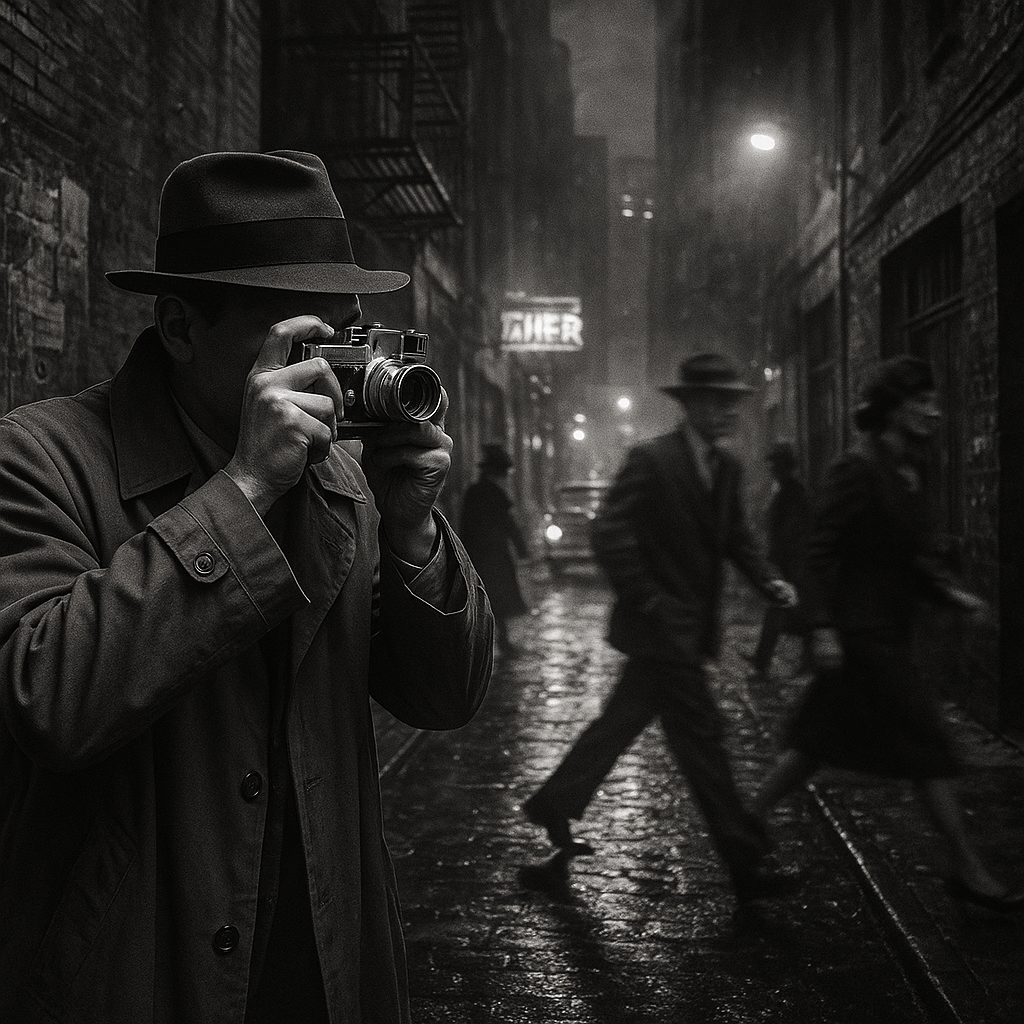
This is a question that comes up often, and the answer isn’t always clear-cut. In general terms, street photography prioritizes the human element — it’s about capturing candid moments of people going about their lives in public spaces. The city is the setting, but the people are the story.
Urban photography, on the other hand, is a broader category that can include architectural photography, cityscapes, abstract geometry found in city structures, light patterns, and the built environment itself. A photograph of a stunning glass skyscraper reflected in a rain puddle might be compelling urban photography with no human figures at all.
The two styles overlap constantly. Many photographers move fluidly between them, sometimes within a single shoot. But understanding the distinction can help photographers develop their own intentional approach to the city as a subject.
- Street photography: Candid, human-centered, spontaneous, often emotionally driven
- Urban photography: May be planned or spontaneous, architecture and environment are valid subjects, broader compositional freedom
- Where they overlap: Both engage with public spaces, both require an eye for light and composition, both document the texture of city life
Influential Voices and Controversies Along the Way
Why Was Sally Mann Controversial?
No survey of photography’s evolution — even one focused on urban and street work — is complete without acknowledging the debates around ethics, consent, and subject matter. Sally Mann became one of the most controversial photographers of the 20th century largely due to her 1992 book Immediate Family, which featured intimate, often nude photographs of her own young children taken on their rural Virginia farm.
Critics argued the images were exploitative and raised serious questions about the ethics of photographing minors — even one’s own children — in vulnerable or potentially sexualized contexts. Defenders of Mann’s work argued the photographs were deeply artistic, tender, and rooted in a genuine documentation of childhood innocence and complexity. The debate was fierce, dividing the art world and bringing questions of consent and representation into mainstream conversation.
While Mann’s work wasn’t street photography in the traditional sense, the controversy she sparked had lasting implications for how photographers across all genres think about their relationship to their subjects, especially those who cannot fully consent to being photographed.
Ethics, Consent, and the Public Lens
Street photography has always existed in a legal and ethical gray zone. In most countries, photographing people in public spaces is entirely legal — there is no reasonable expectation of privacy when you’re walking down a city street. However, legality and ethics are not the same thing, and contemporary photographers are increasingly thoughtful about the power dynamics involved in pointing a camera at strangers.
Questions of race, class, and representation have become more prominent in recent years. Who is photographing whom? Whose stories are being told, and who benefits from those images? These are not easy questions, but they’re the right ones to be asking.
The Digital Revolution and the Democratization of Street Photography
The arrival of digital cameras in the late 1990s and early 2000s transformed photography at every level. Memory cards replaced rolls of film, and suddenly the cost of taking a bad photograph dropped to essentially zero. Photographers could experiment freely, shoot hundreds of frames in an afternoon, and review results immediately. The barrier to entry fell dramatically.
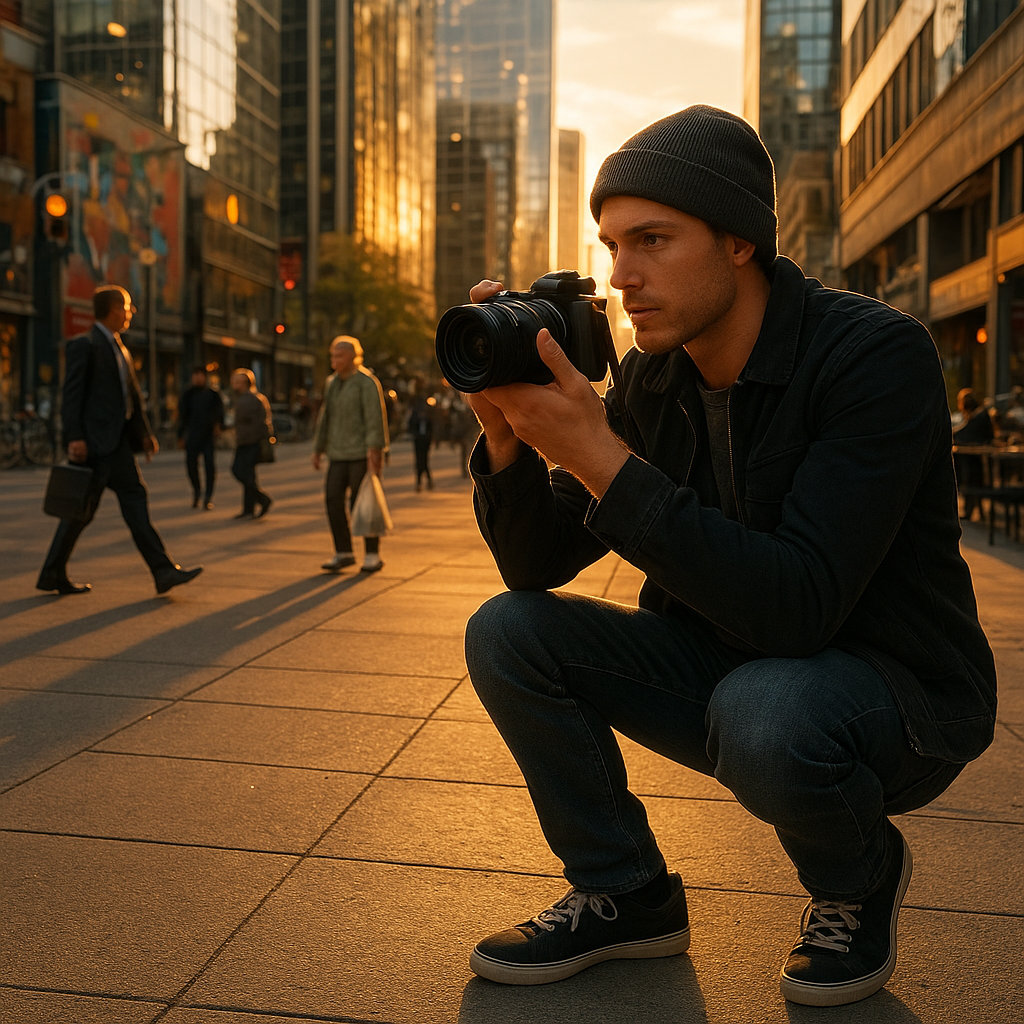
Then came smartphones. The camera that 95% of Americans now carry in their pockets has turned street photography into something genuinely democratic. Instagram, Flickr, and dedicated photography communities online have created global audiences for street photographers who might never have had gallery access in previous decades.
This democratization has had mixed results. On one hand, there are more street photographers than ever before, and some genuinely extraordinary work is being produced by people who came to the art form through their phone cameras. On the other hand, the sheer volume of images has made it harder to develop a distinct voice, and the performative nature of social media has encouraged a certain kind of aesthetic sameness — everyone hunting the same dramatic shadows and neon reflections.
What Is the 20/60/20 Rule in Photography?
The 20/60/20 rule is a practical framework sometimes discussed in photography circles, particularly in relation to editing and curating a body of work. The idea is that roughly 20% of your photographs will be genuinely strong and worth keeping, 60% will be average or mediocre, and the remaining 20% will be outright failures — badly exposed, poorly composed, or simply uninteresting.
The rule isn’t meant to be discouraging. It’s actually a reminder that even experienced, accomplished photographers produce a lot of work that doesn’t land. The skill isn’t in shooting perfectly every time — it’s in developing the eye to recognize which images belong in that top 20% and having the discipline to let go of everything else. For street and urban photographers who shoot in high volume, this kind of ruthless editing is essential to building a cohesive, powerful portfolio.
Urban Photography Today: Trends and Directions
Contemporary urban photography is a broad and genuinely exciting space. Several distinct trends have emerged in recent years:
- Minimalist urban photography: Using the clean lines and geometry of modern architecture to create stark, graphic images with strong negative space
- Color street photography: Once dominated by black and white, street photography has embraced color in bold and sophisticated ways — particularly vibrant artificial lighting at night
- Long exposure cityscapes: Using slow shutter speeds to create flowing light trails and silky water effects in urban environments
- Documentary urban work: Photographers returning to street photography’s roots to document gentrification, homelessness, and changing neighborhood identities
- Aerial urban photography: Drones have opened up entirely new perspectives on city spaces, revealing patterns and symmetries invisible from ground level
Film’s Quiet Comeback
Interestingly, at the same moment digital tools are making photography more accessible than ever, a significant number of photographers — particularly younger ones — are returning to film. The lo-fi aesthetic, the limitations of a fixed number of frames, and the tactile experience of shooting on film have created a counter-movement that values slowness and intentionality. For street photography, where quick reflexes matter enormously, film is a real constraint — and that constraint is part of the appeal.
In Summary
Urban and street photography have come a long way from Eugène Atget quietly documenting the streets of Paris with his large-format camera. The art form has been shaped by technological leaps, social upheaval, ethical debates, and the contributions of photographers who were willing to see the city not as background noise, but as the most compelling subject available to them.
Understanding this history doesn’t just provide context — it actively makes you a better photographer. Knowing why Cartier-Bresson’s decisive moment mattered, or how the controversies around photographers like Sally Mann changed conversations about ethics, helps develop a more intentional, thoughtful approach to your own practice. Whether you’re shooting on a vintage film camera or an iPhone, you’re participating in a tradition that stretches back to the earliest days of the medium — and that tradition is still very much alive.