

Picture a young violinist who can perform Beethoven’s Violin Concerto flawlessly from memory but freezes the moment someone asks her to play something — anything — that isn’t written down. She stares at the strings as if they’ve suddenly become unfamiliar. This scenario plays out in conservatories and music schools across the country more often than most classical musicians would like to admit. And it raises a genuinely important question: how did we arrive at a training tradition so thoroughly focused on written scores that the ability to spontaneously create music became almost entirely lost?
The answer is complicated, historically speaking. But the argument for bringing improvisation back into classical music education is growing louder — and for good reason. From cognitive development to musical authenticity, the case for improvisation isn’t just compelling. It may be essential.
A Brief History: When Classical Musicians Could Improvise
It might surprise some people to learn that improvisation wasn’t always the foreign concept it is in many classical training programs today. For most of Western music history, the ability to improvise was considered a fundamental skill — not an optional extra.
Johann Sebastian Bach was legendarily known for his improvisational abilities, reportedly able to spin entire fugues on the spot. Mozart improvised cadenzas in his own piano concertos during live performances. Beethoven was so revered as an improviser in Vienna that audiences would gather specifically to hear him explore ideas at the keyboard — before a note had been written down. Liszt essentially turned improvisation into a spectator sport.
So what is improvisation in classical music? At its core, it’s the act of composing and performing music simultaneously, in real time, without a written score. In the classical tradition, this took many forms: ornamentation of written melodies, cadenzas in concertos, fantasias on popular themes, and full-scale extemporization that demonstrated a composer-performer’s mastery of harmony, counterpoint, and form.
The decline of improvisation in classical training largely corresponds to the late 19th and early 20th centuries, when the repertoire became increasingly canonized and the role of performer shifted from creator-interpreter to faithful servant of the score. Recording technology reinforced this shift — suddenly, every note could be scrutinized and compared. The pressure to play exactly what was written, exactly as the composer intended, gradually squeezed out the space for spontaneous musical creation.
The Real Benefits of Improvising as a Classical Musician
The good news is that more educators and performers are recognizing what’s been lost — and actively working to restore it. The benefits of incorporating improvisation into classical training aren’t just philosophical. They’re deeply practical.
Deeper Harmonic Understanding
When you improvise, you can’t rely on a score to tell you what comes next. You have to know why one chord leads to another, why a certain melodic phrase creates tension, and how to resolve it. This forces a more intuitive, internalized understanding of harmony that reading notation alone rarely develops. Many classical students can identify a diminished seventh chord on paper but couldn’t use one expressively in a moment of spontaneous playing.
Greater Musical Confidence and Presence
One of the most frequently reported benefits among classical musicians who begin improvising is a dramatic increase in musical confidence — not just in improvised contexts, but in their prepared repertoire as well. When you’ve learned to trust your musical instincts, the paralysis of performance anxiety tends to loosen. You become more present in the music rather than anxiously tracking your position on a mental score.
Improved Ear Training
Improvisation demands active listening. You have to hear what you just played, process it instantly, and respond. For classical students who spend enormous amounts of time reading music, this kind of reactive, ear-led playing can unlock a new relationship with their instrument — one where sound, rather than symbol, leads the way.
A More Personal Relationship with Music
Perhaps most importantly, improvisation gives musicians a sense of ownership over the music they make. When you’ve created something in the moment, even something small, even something imperfect, it belongs to you in a way that a perfectly executed Schubert sonata rarely does. That sense of personal investment has a way of flowing back into performed repertoire, making interpretations feel more alive and genuine.
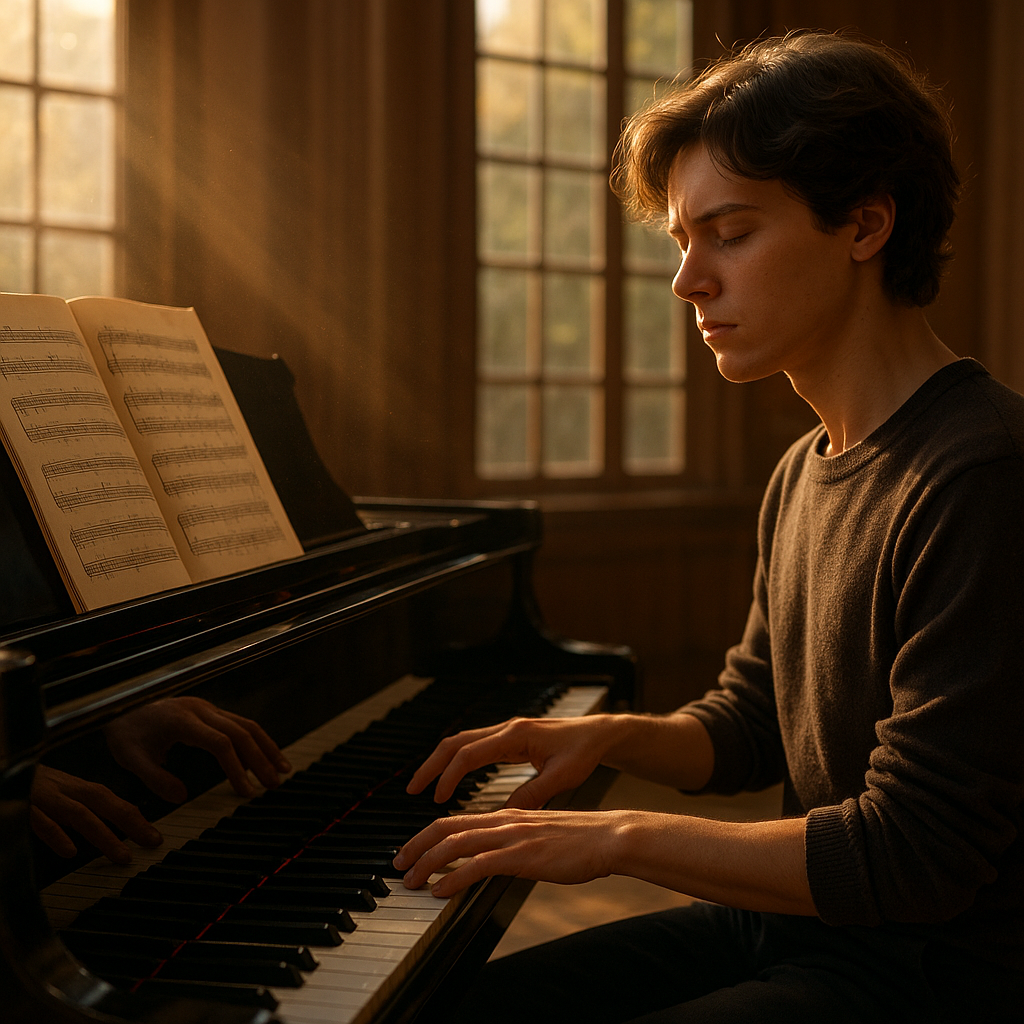
The Four C’s of Improvisation
What are the four C’s of improvisation? While different educators frame them slightly differently, the four C’s commonly referenced in improvisational training are: Creativity, Collaboration, Communication, and Courage.
- Creativity refers to the generative act itself — the willingness to produce musical ideas without the safety net of written instruction.
- Collaboration highlights how improvisation, especially in ensemble settings, requires listening and responding to others in real time — a skill that transforms how classical musicians approach chamber music and orchestral playing.
- Communication speaks to the fundamental purpose of music: expressing something to a listener. Improvisation strips away the intermediary of the score and demands direct musical expression.
- Courage is perhaps the most crucial. Improvisation requires a willingness to be imperfect in public — to take musical risks without knowing the outcome. For classical musicians trained in a culture of precision and correctness, this can feel deeply uncomfortable at first.
These four qualities, once developed through improvisation practice, have a transformative effect on all aspects of musical performance — not just the improvised kind.
Addressing the “Seven Rules” Question
What are the 7 rules of improvisation? This question often comes from the world of theatrical improvisation (think comedy improv), where teachers have developed frameworks for spontaneous performance. The exact rules vary by school of thought, but commonly cited principles include: say “yes, and” to your partner’s ideas, commit fully to whatever you start, listen more than you plan, avoid judging your own ideas in the moment, keep things simple, build on what came before, and serve the scene rather than yourself.
What’s fascinating is how directly these principles translate to musical improvisation. “Say yes, and” becomes: play the note you just played, and develop it. “Don’t judge in the moment” becomes: let the phrase complete itself before you evaluate it. “Serve the scene” becomes: serve the musical conversation, the key, the groove, the emotional arc.
Classical musicians who approach improvisation with theatrical improv principles in mind often find the mental barriers dissolving faster than they expected. The challenge isn’t musical — it’s psychological. And that reframing can be genuinely liberating.
Practical Ways to Introduce Improvisation into Classical Training
The path from score-dependent playing to confident improvisation doesn’t have to be dramatic or disruptive. There are gradual, accessible entry points that can be incorporated into existing practice routines.
Start with Ornamentation
Baroque music is full of ornaments that were traditionally improvised by performers. Start by taking a simple Bach or Handel melody and adding your own trills, turns, and embellishments. This is historically grounded improvisation that keeps one foot in the notated score while beginning to exercise spontaneous musical decision-making.
Improvise Over Drone Tones
Set a single sustained pitch (a drone) and improvise a melody above it. This is one of the oldest musical practices in the world, found in everything from Indian classical music to Celtic folk traditions. It removes the anxiety of harmonic movement and lets the player focus purely on melodic expression.
Write Your Own Cadenzas
If you’re studying a concerto, try writing and then gradually improvising your own cadenza before learning the standard one. This was standard practice in Mozart’s time and connects the performer to the compositional thinking behind the work.
Ensemble Improvisation Games
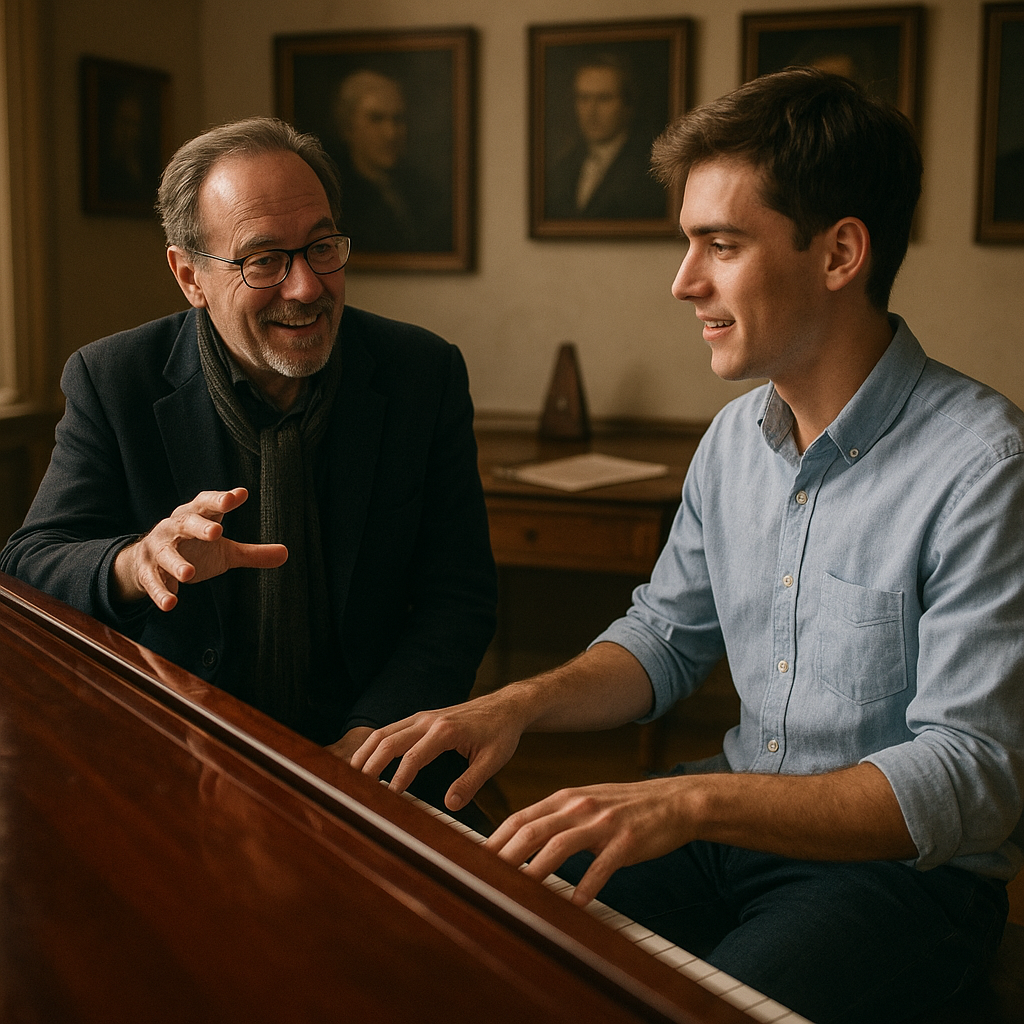
In group lessons or workshops, structured improvisation games — like passing a musical phrase around a circle, each player extending or responding to the previous idea — build both comfort and collaborative listening skills that transfer directly to ensemble playing.
A Note on Neurodiversity and Improvisation
The question which composer was autistic comes up with some frequency in classical music discussions, often in relation to famous figures like Erik Satie, and some researchers have speculated about traits in others. What this line of inquiry often points to is a broader curiosity about how differently wired minds approach musical creation — and whether the rigid structures of classical training serve all learners equally well.
Research in music education has increasingly shown that offering multiple modes of musical engagement, including improvisation, benefits neurodivergent learners in particular. Improvisation can be a powerful tool for students who struggle with the social performance pressures of conventional recitals but thrive when given the freedom to express music on their own terms. This is another compelling reason to broaden what “classical training” looks like in practice.
The Broader Argument: What Classical Music Loses Without Improvisation
When improvisation is absent from training, something subtle but significant happens to the culture of classical music as a whole. Performers become interpreters rather than musicians in the fullest sense. Audiences, sensing the difference, sometimes describe classical concerts as feeling “museum-like” — beautiful, preserved, but somehow not fully alive.
Improvisation reconnects classical musicians to the creative act that originally produced the music they perform. Understanding how Beethoven might have moved through harmonic ideas at the keyboard — not from a score, but from instinct and imagination — changes how you approach playing his sonatas. It makes you a participant in the tradition rather than a curator of it.
The musicians who have walked both paths — rigorous classical training and genuine improvisational practice — consistently report that each enriches the other. Classical study gives improvisation structure, vocabulary, and depth. Improvisation gives classical playing life, risk, and a sense of authentic presence.
Conclusion
The separation of improvisation from classical music training is a relatively recent development, historically speaking — and an increasingly difficult one to defend. The evidence from music education, cognitive science, and the testimonies of working musicians all point in the same direction: improvisation isn’t a distraction from serious classical training. It’s a missing piece of it.
Bringing it back doesn’t mean abandoning the score or treating Brahms like a jazz standard. It means developing the full musicianship that the great composers themselves possessed — the ability to hear, respond, create, and communicate in real time. It means training musicians, not just performers. And it means preserving a living tradition rather than a perfectly preserved relic.
The notes are still there on the page. But the spaces between them — that’s where improvisation lives. And those spaces matter more than classical training has recently been willing to admit.